
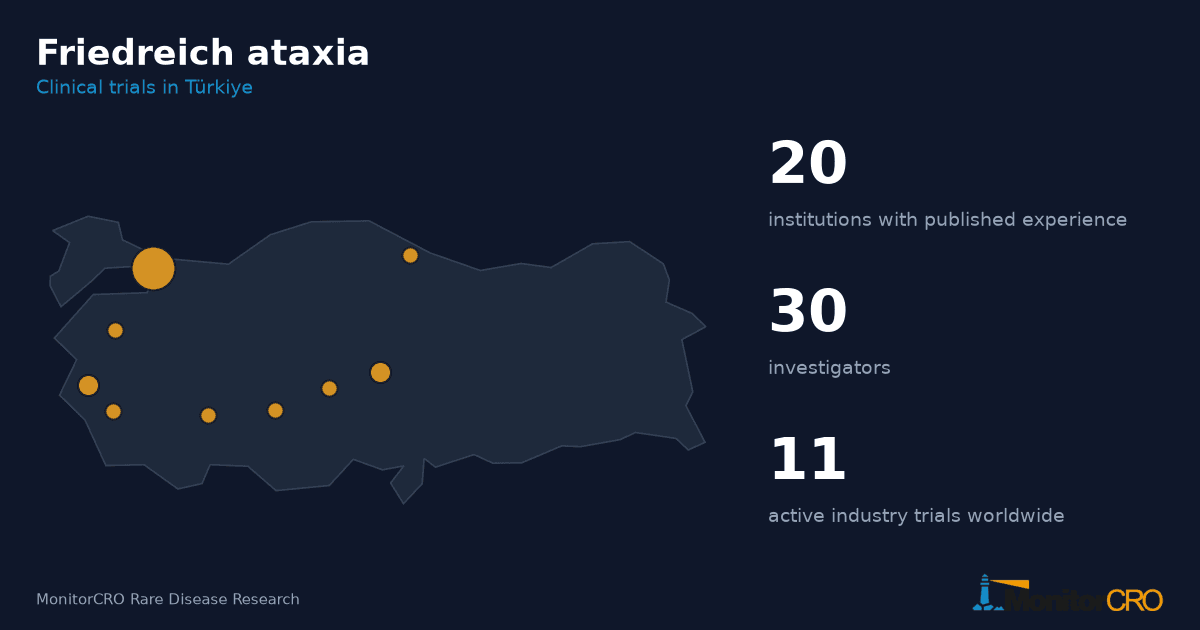
Friedreich ataxia (FA) is a small indication with a small trial pipeline, which makes every confirmed patient count. Türkiye has an estimated 2,000 people living with FA, a consanguinity rate that enriches autosomal recessive disease, and 20 institutions in nine cities with published FA experience. Only one of the 40 industry-sponsored FA studies to date has included a Turkish site, so the patient pool is essentially unused.
Registry and literature data as of 2026-09-24 · Published 2026-10-01
~2,000
estimated patients in Türkiye
22-24%
consanguineous marriages nationwide
20
institutions with published FA experience
1
industry FA trial with a Turkish site
Friedreich ataxia at a glance
FA (ORPHA:95) is an autosomal recessive neurodegenerative disease caused by GAA repeat expansions in the FXN gene. It affects about 1 in 40,000 people in the United States; symptoms usually begin between ages 5 and 15, about a quarter of patients have a late-onset form after 25, and hypertrophic cardiomyopathy is the main cause of early death. The first disease-specific therapy was approved in the United States in 2023 and in the European Union in 2024, and the pipeline behind it is small but active: 18 industry sponsors have run 40 Phase 1 to 3 FA studies, 11 of them active today and 9 started in 2024 or later.
The landscape in Türkiye
Applied to a population of about 85 million, the global rate suggests roughly 2,000 people living with FA in Türkiye. Because FA is recessive, the national consanguinity rate of 22 to 24 percent of marriages, measured consistently by the demographic and health surveys, is expected to raise the true figure above that estimate. Diagnosis is confirmed by FXN repeat testing in university medical genetics departments, and patients are followed in the ataxia and neuromuscular clinics of neurology and paediatric neurology departments, with cardiology follow-up in the same hospitals.
Our screen of PubMed and the trial registries found 20 institutions and 30 investigators with FA-related publications since 2016, concentrated in İstanbul and with active groups in Kayseri, İzmir and six further cities. A single industry FA study has enrolled at a Turkish site so far, which means the referral centres and their patients have not been drawn into competing protocols.
Why Türkiye for the next FA study
FA trials are limited by the number of eligible patients, not by site capacity, and a country that can add a few dozen confirmed patients changes a Phase 2 or 3 timeline. Türkiye's referral concentration through a single national payer, an enriched recessive population and genetics departments that already confirm FXN expansions make it a practical addition to a country list that usually stops at Western Europe and North America.
Standard outcome scales such as the modified Friedreich Ataxia Rating Scale can be trained and certified at the referral centres, and echocardiography for cardiac monitoring is routine. Sponsors who have run FA studies in a handful of countries will find that Türkiye adds patients without adding regulatory complexity: one application to TİTCK, a parallel ethics review and a local legal representative.
How MonitorCRO opens Türkiye
MonitorCRO has run clinical trials in Türkiye since 1999 and acts as legal representative for international sponsors before TİTCK, so no local entity is needed. We prepare and file the single regulatory and ethics application, contract the centres, handle the import permit for the investigational product and monitor the sites on our own Helios EDC. The names of the FA centres and investigators behind the numbers above are shared during feasibility, with their consent.
Questions sponsors ask
How many confirmed FA patients could realistically be enrolled in Türkiye?
With an estimated 2,000 patients and follow-up concentrated in a few university ataxia clinics, two to four centres can typically identify several dozen genetically confirmed patients. We confirm the number per protocol in the feasibility snapshot.
Is FXN genetic testing available and reimbursed?
Yes. FXN GAA repeat testing is performed in university medical genetics departments and reimbursed when ordered by a specialist; existing reports can be summarised in English for eligibility review.
Can Turkish sites run the modified Friedreich Ataxia Rating Scale?
Yes. Neurologists at the referral centres use standard ataxia scales in routine care and are trained and certified per study by the sponsor's rater training vendor.
Can Turkish sites be added to a study that is already running?
Yes. Adding Türkiye is a new country application to TİTCK with the current protocol version. MonitorCRO acts as legal representative and runs submission, contracting and import in parallel.
Planning a study in this disease?
Tell us the indication, phase and timeline. We reply within two working days with a first view of centres, patient access and a start-up timeline for Türkiye.
Discuss your studySources
- MedlinePlus Genetics: Friedreich ataxia
- Orphanet: Friedreich ataxia (ORPHA:95)
- Koc I. Prevalence and sociodemographic correlates of consanguineous marriages in Turkey. J Biosoc Sci 2008
- Koç İ, Eryurt MA. The causal relationship between consanguineous marriages and infant mortality in Turkey. J Biosoc Sci 2017
- MonitorCRO screen of ClinicalTrials.gov (industry Phase 1 to 3) and PubMed (Türkiye affiliations, 2016 onwards), September 2026
MonitorCRO Rare Disease Research